
Thousands celebrate community and resistance at Pride march
Ruby Pratka, Local Journalism Initiative reporter
editor@qctonline.com
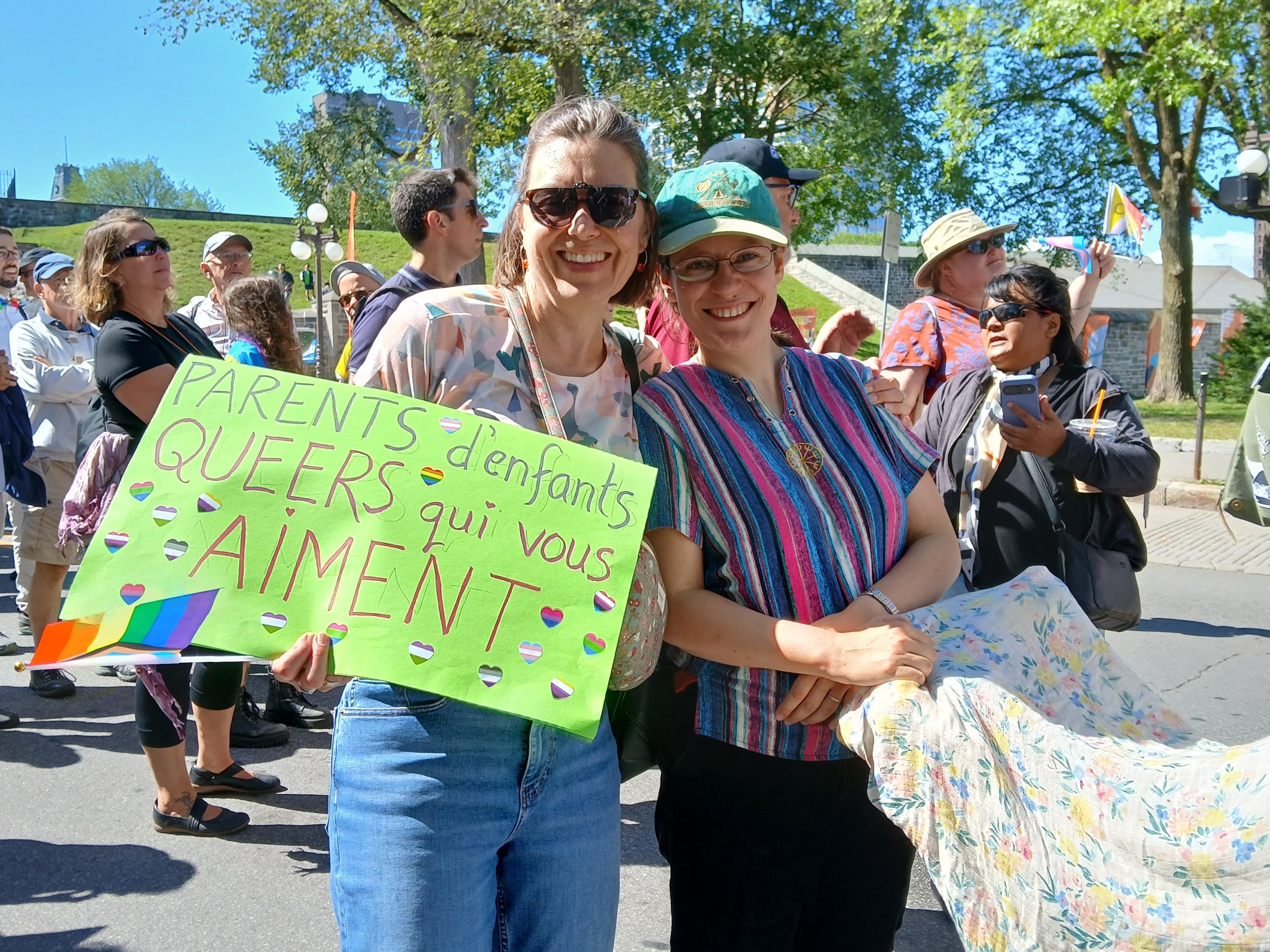
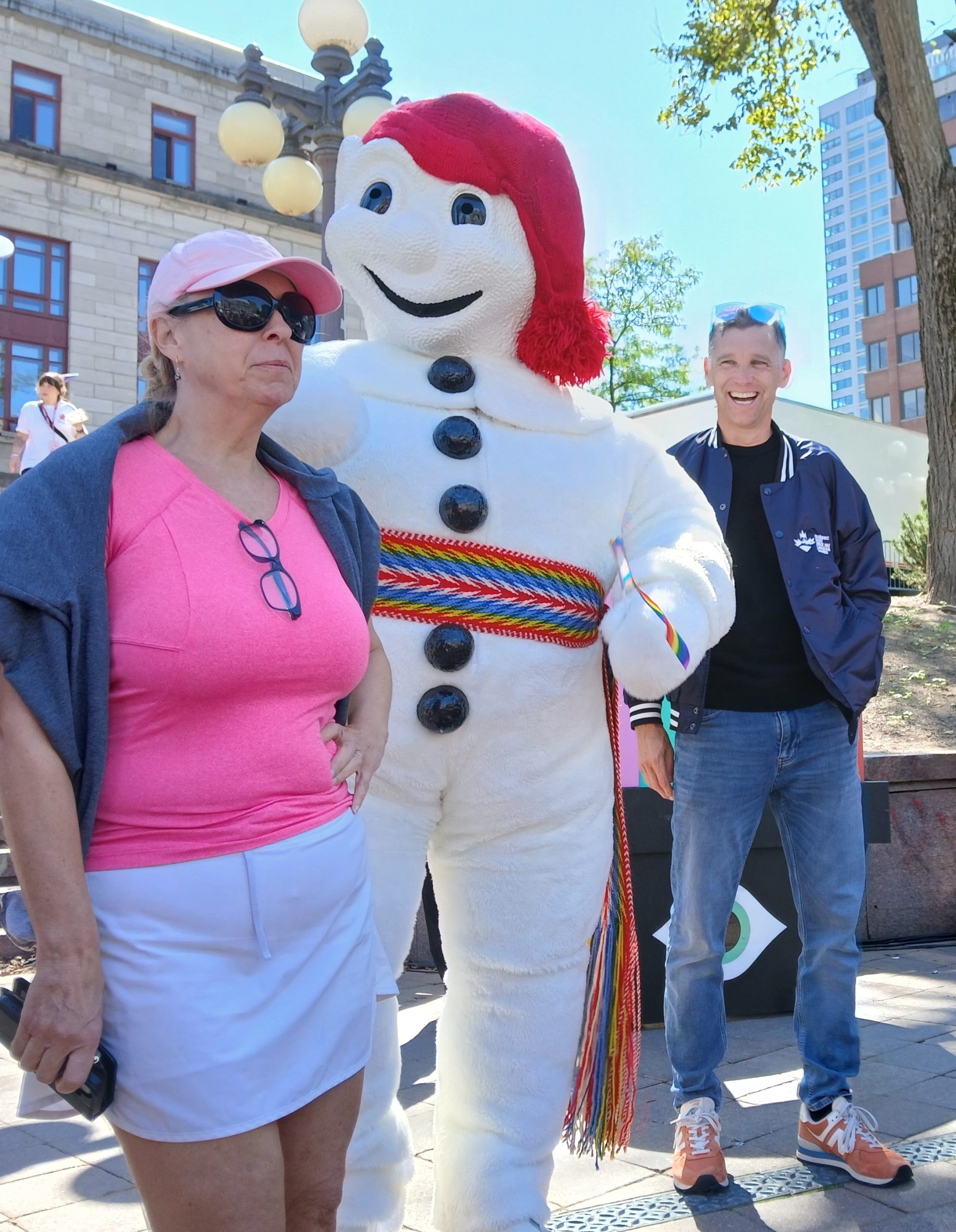
Place D’Youville filled with a sea of people early Sunday afternoon as the clock ticked down to the scheduled start time of the annual Pride march. Older gay couples walked hand in hand; teenagers in colourful outfits draped themselves in various iterations of the rainbow flag and other Pride flags, including at least one extraordinary hand-crocheted rainbow cape. Mayor Bruno Marchand and fellow mayoral candidates Jackie Smith and Claude Villeneuve walked with their families or party colleagues, and Bonhomme Carnaval put on his rainbow sash and posed for selfies with parade-goers despite the heat. Families marched with young children, and groups of friends embraced the “you be you” atmosphere and marched in butterfly, wolf or cat outfits. Members of the Sisters of Perpetual Indulgence – a Montreal- based performance art and community service group – marched in full makeup and glittering nuns’ habits.
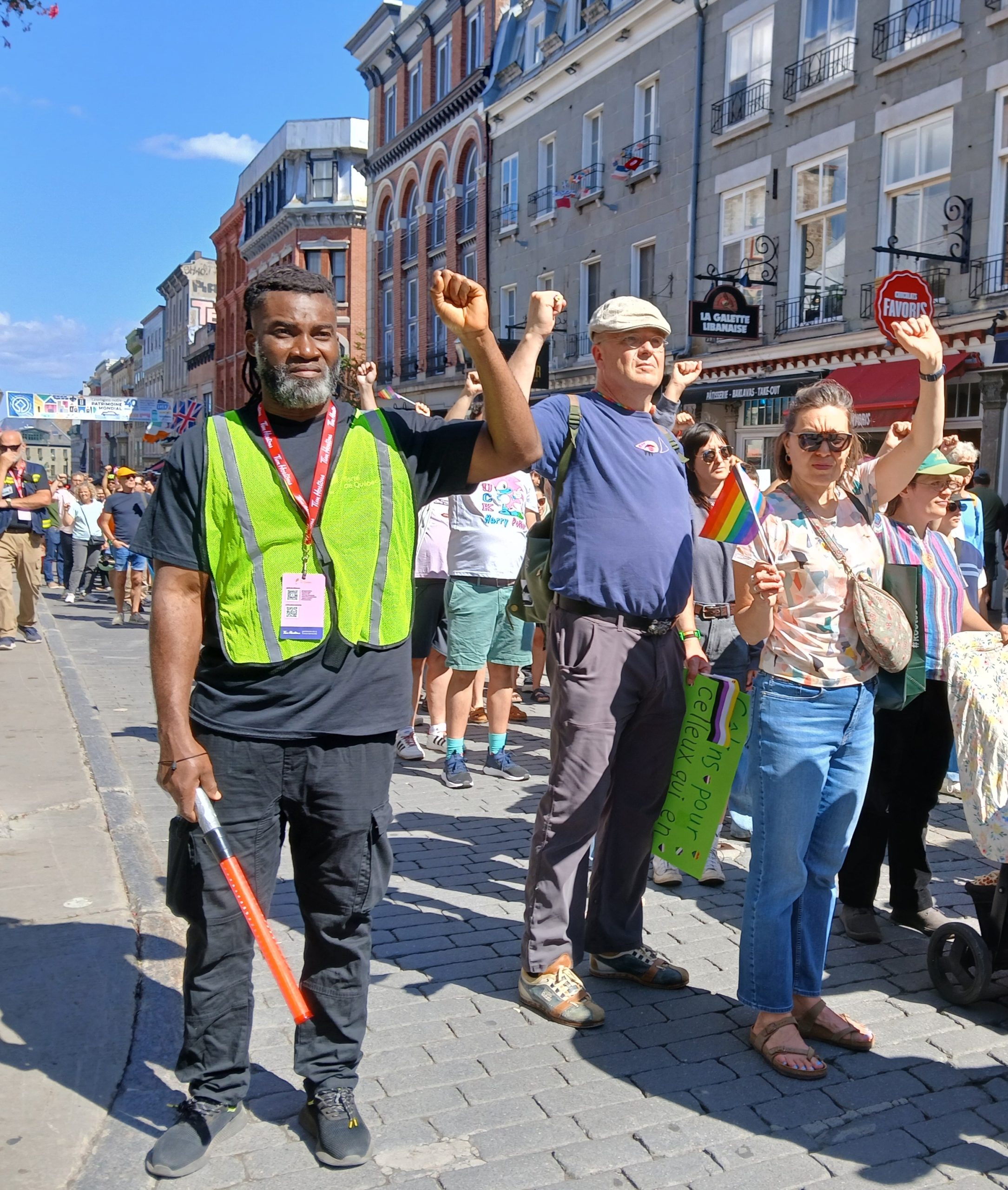
The joyous chaos of the march is a longstanding tradition on the last day of Pride in Quebec City, which forgoes the flashy parades popular in some bigger cities for a march where anyone can participate, where formal partisan and corporate delegations are discouraged. Several thousand people marched up Boul. Honoré- Mercier toward the National Assembly and through Old Québec, chanting “Our voices, our rights!” and “Protect trans kids!” The march looped back up Rue Saint-Jean toward Place D’Youville, where anyone who wanted to could take the microphone and address the crowd for two minutes. Many took the opportunity to talk about ongoing discrimination against the gay and transgender community in Quebec and elsewhere, to criticize the Coalition Avenir Québec government’s approach to trans rights and to celebrate the spirit of community. One trans woman named Marie-Soleil said she was celebrating the 30th anniversary of beginning her transition. “Thirty years ago, I thought I was all alone, but look at us now!” she said to cheers.
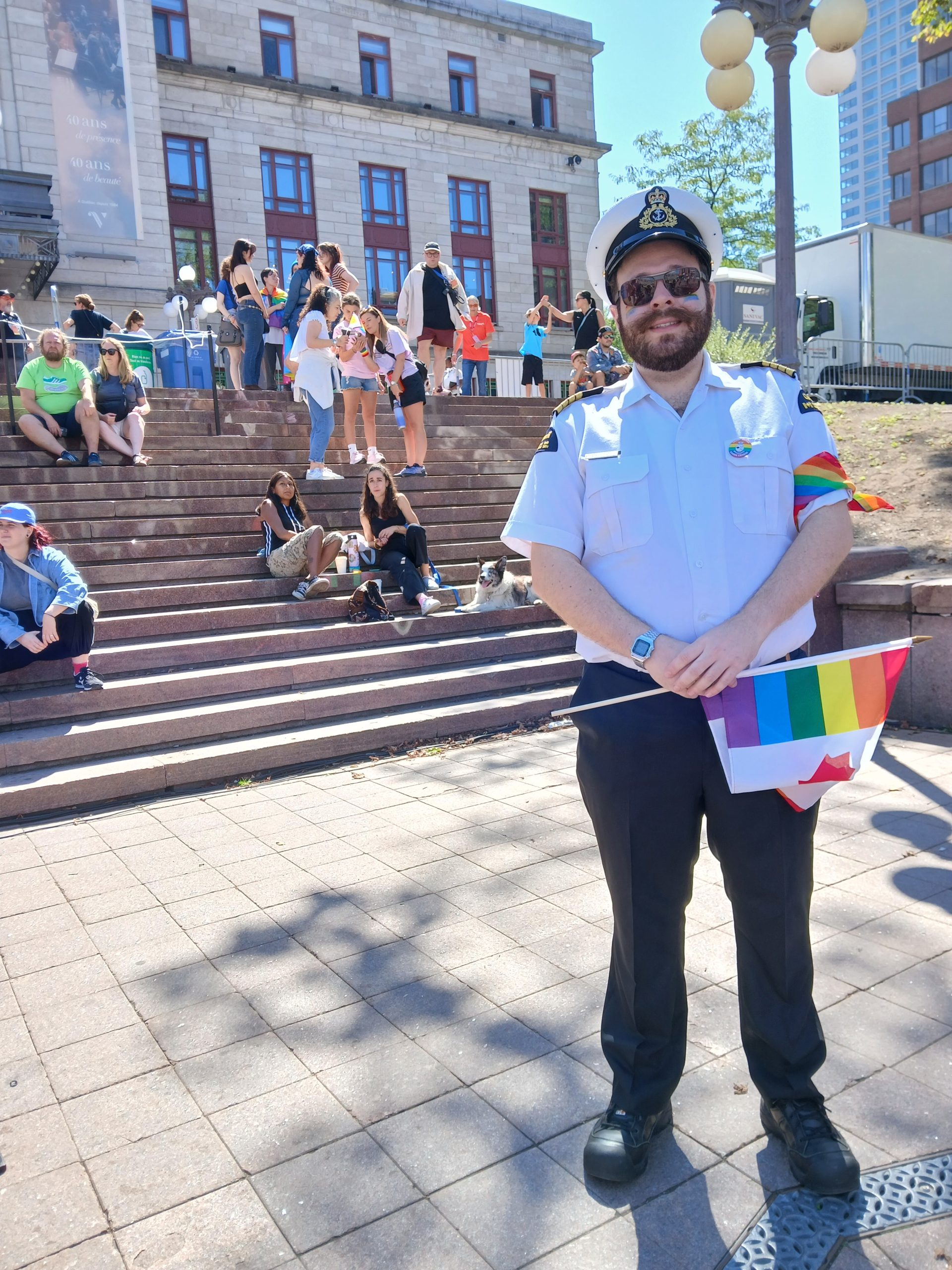
Amid the swirling colours, one person wore a captain’s uniform. “I’m marching for myself and for all the people who think [being gay, queer or trans] can be an obstacle to their career,” said Coast Guard Capt. Jean-Christophe Laroche, an icebreaker captain. “I’ve marched every year for the past few years, unless I’ve been on my boat, but I haven’t been in uniform. This year I asked my supervisor if I could march in uniform, and my supervisor was OK with it, so here I am. We are the ones responsible for maritime search and rescue, and we don’t want anyone to be scared to call us because of who they are. You will be treated with respect.”
Carla Moffat and Miriam Blair, two moms active in the local English-speaking community, marched with Blair’s five-month-old daughter in a stroller. “We came here as friends and parents to give free hugs to anyone who needs them,” said Moffat, waving a “free hugs” sign.
Érica, a trans woman from Lévis who gave only her first name, grew up in a rural area where she said it was difficult for trans people to find work and feel safe. She said being part of the march through downtown Quebec City was a powerful experience. “I used to find Pride parades a little silly, but after I travelled a bit, I realized that just the visibility was hopeful, the fact that we can be ourselves and show the world we’re here.”
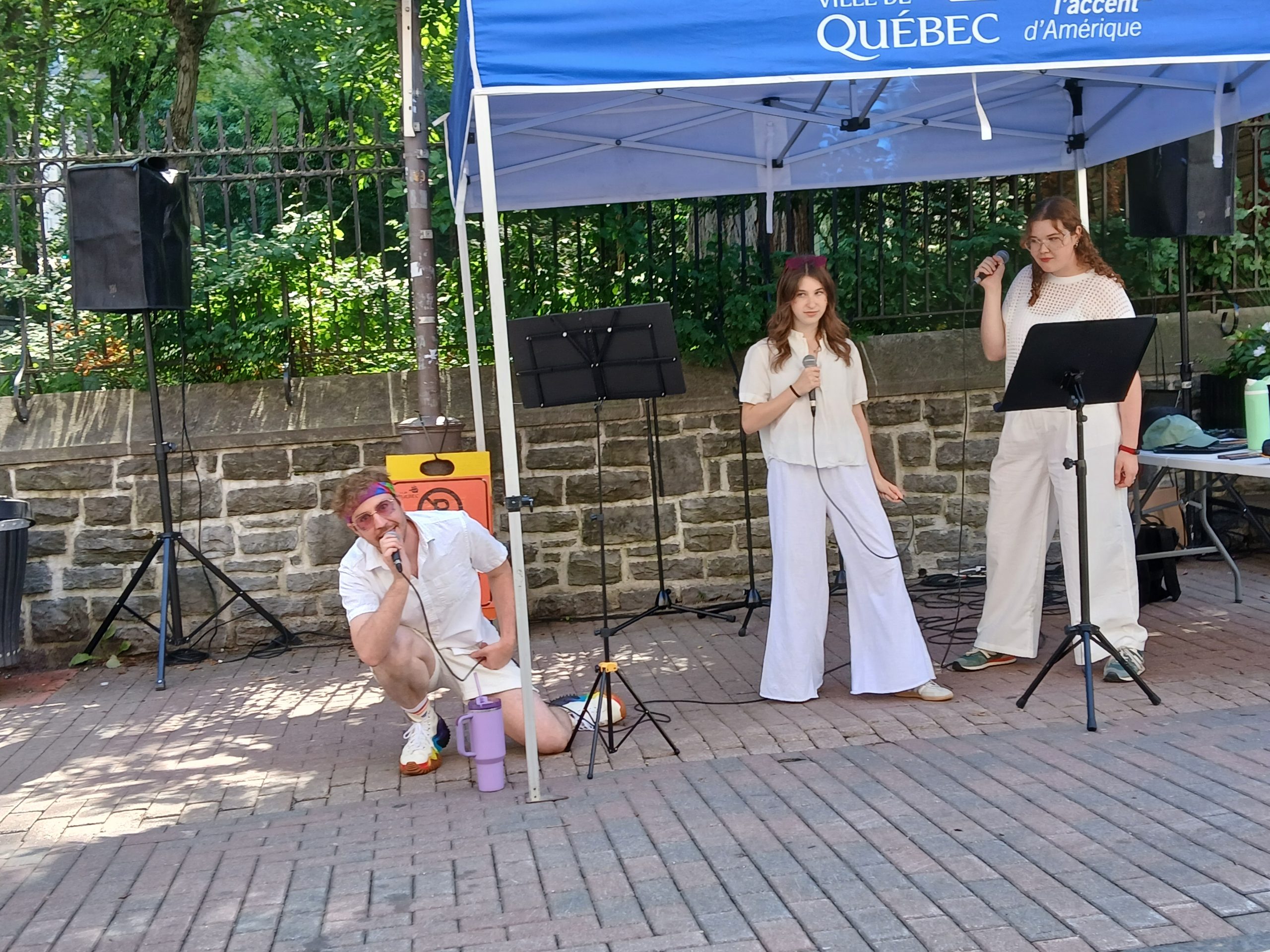
The day’s celebrations began with an open Zumba class on Place D’Youville, a queer art market and Broadway-themed street performances on Rue Saint-Jean in the historic heart of the city’s queer community, and gender-affirming activities at Place D’Youville and inside the Palais Montcalm, where people could experiment with clothes, makeup, new haircuts and gender presentation. A Sunday evening drag show featuring Barbada and Gisèle Lullaby topped off the festivities.
“This Pride reflected the communities of Quebec City. It brought together people from all walks of life and reaffirmed the importance of continuing to work together for a more inclusive society,” said Béatrice Robichaud, president of the Alliance Arc-en-Ciel de Québec, which organizes the annual celebrations, which began Aug. 28.


 Drilling to sample soil is taking place along potential routes for the proposed third link. (Photo from Radio-Canada archives)
 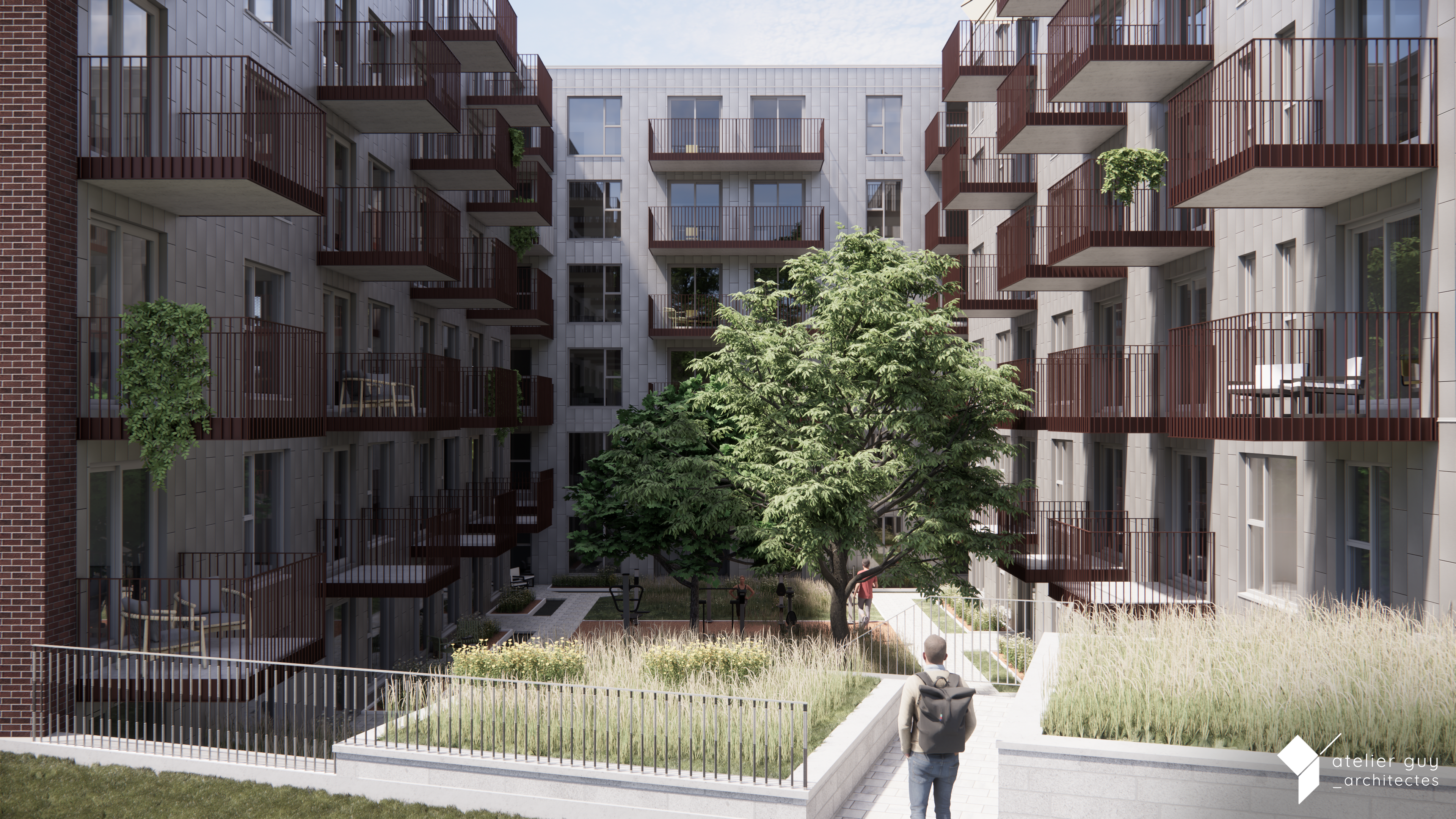 This architect’s image shows the courtyard between apartments in the Le Arno project to be built on a parking lot in Saint-Roch. (Image courtesy of Logis-Experts)
 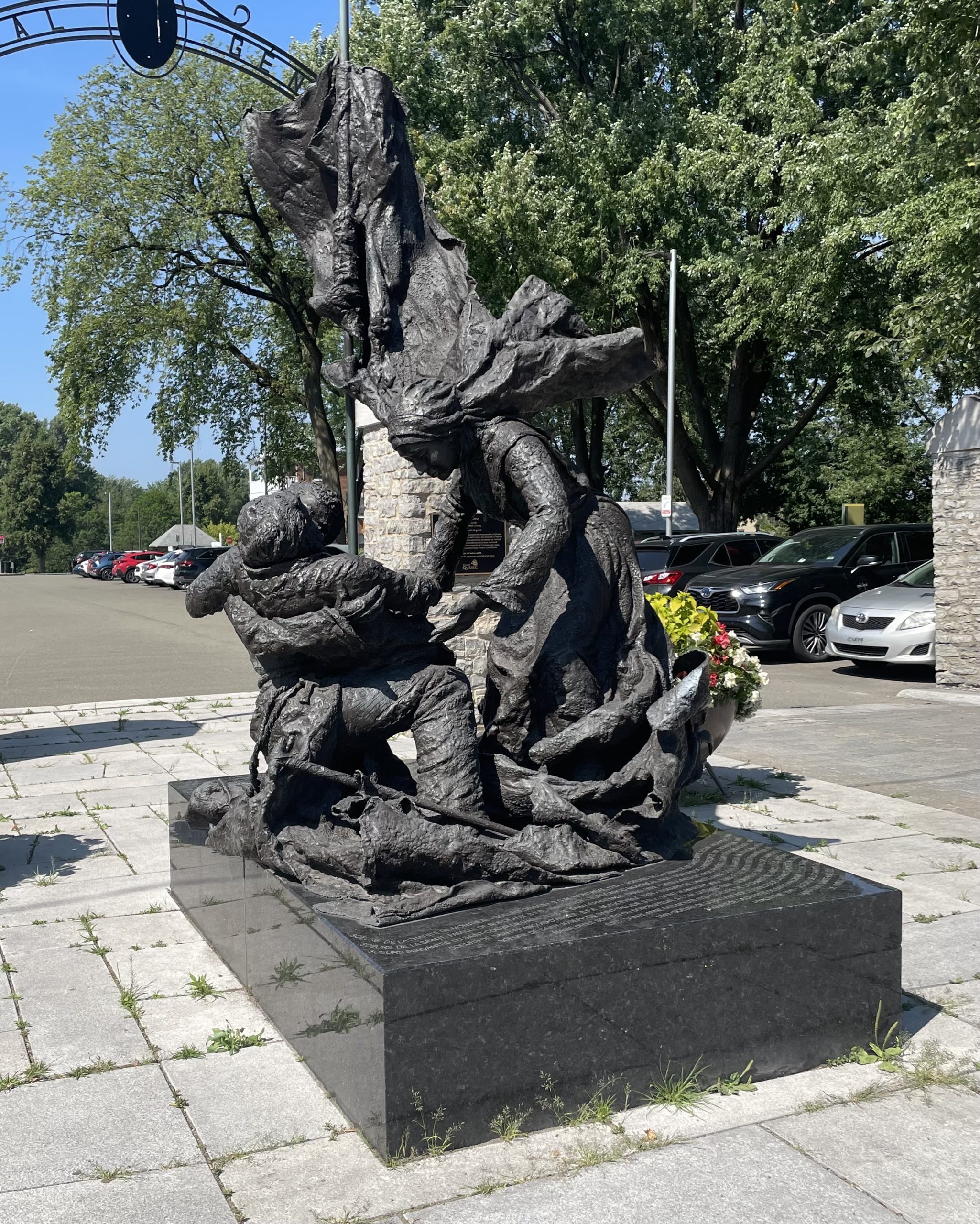 Compassion, a life-size bronze statue by Vietnamese-Canadian artist Chanh Trung Truong, stands at the entrance to the historic Hôpital-Général de Québec at the northern end of Boul. Langelier. (Photo by Shirley Nadeau)
  Work begins on addition to Grande Allée tower
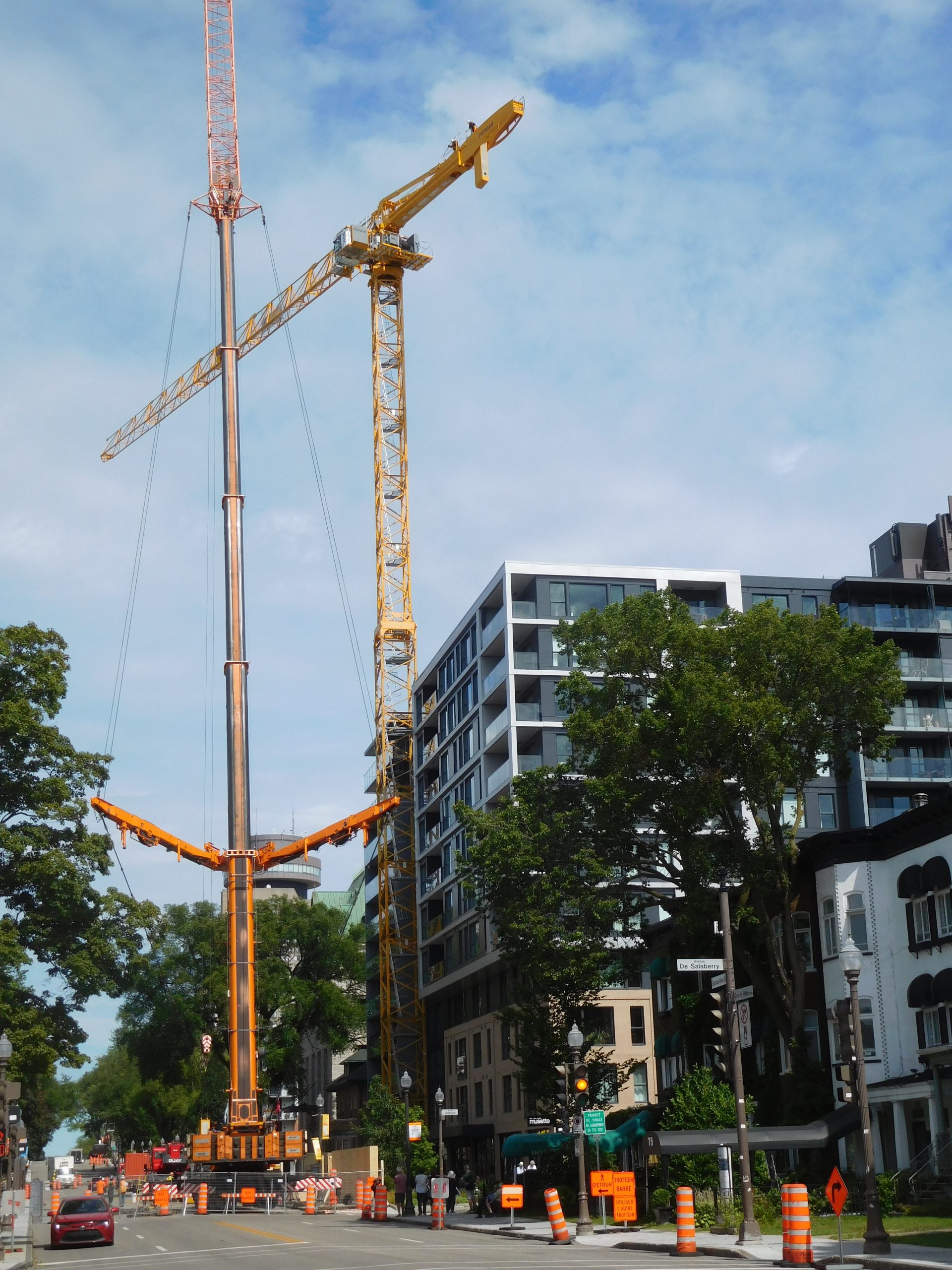
Work is already underway to add 10 storeys to the apartment building at 153-155 Grande Allée Est. Last week, a crew was erecting a towering crane in front of the building that will be used during the construction period. The owners of the building, Bilodeau Immobilier, had built the current 11-storey building, which opened in 2020, with an eventual addition in mind. The company also owns the Montmorency building behind the Grande Allée tower on Ave. Wilfrid-Laurier. Company general manager Éric Bilodeau previously told the QCT the impact of construction on building residents will be limited by a series of measures (see article in June 11, 2025 edition). (PB-LJI) (Photo by Jonathan Letellier-Black)
Work begins on addition to Grande Allée tower
Work is already underway to add 10 storeys to the apartment building at 153-155 Grande Allée Est. Last week, a crew was erecting a towering crane in front of the building that will be used during the construction period. The owners of the building, Bilodeau Immobilier, had built the current 11-storey building, which opened in 2020, with an eventual addition in mind. The company also owns the Montmorency building behind the Grande Allée tower on Ave. Wilfrid-Laurier. Company general manager Éric Bilodeau previously told the QCT the impact of construction on building residents will be limited by a series of measures (see article in June 11, 2025 edition). (PB-LJI) (Photo by Jonathan Letellier-Black)  Transition Québec Leader and Limoilou Coun. Jackie Smith is surrounded by fellow TQ candidates at a campaign event in Jardin Jean-Paul-L’Allier on Aug. 25. (Photo by Céline Fiuza courtesy of Transition Québec)
 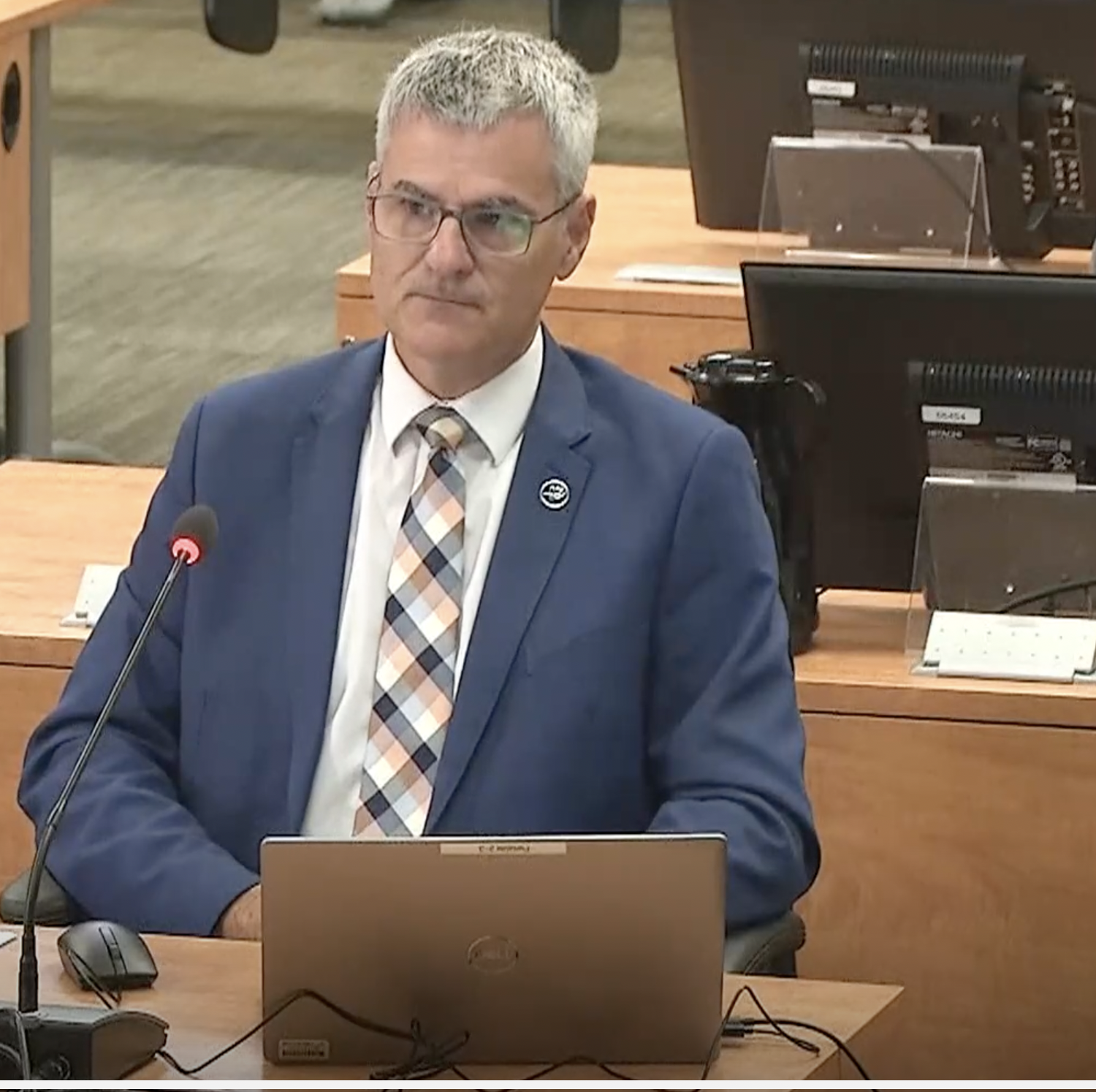 La Peltrie MNA and former cybersecurity minister Éric Caire testifies at the Gallant commission in Montreal on Aug. 27. (Screenshot)
 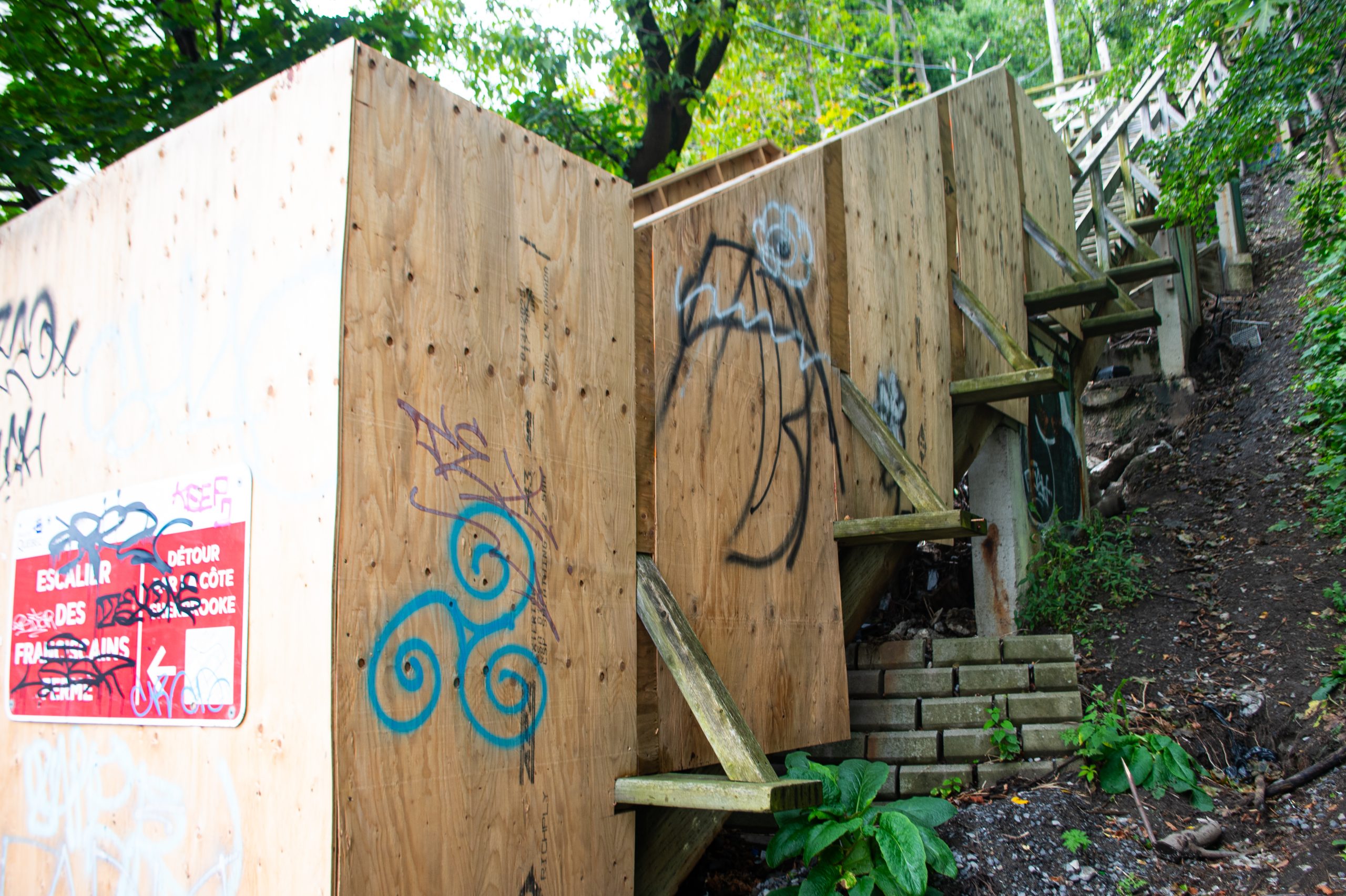 City crews blocked off the Escalier des Franciscains for safety reasons following the June 23 storm. This is the wall pedestrians now face when they come from Ave. de l’Alverne in Montcalm. (Photo by Cassandra Kerwin)