Université Laval marks National Day for Truth and Reconciliation with ceremony and conversation
Sarah Elworthy
sarah@qctonline.com
On Sept. 30, Université Laval marked the National Day for Truth and Reconciliation with ceremony, reflection, and meaningful verbal exchange at Le Grand Axe, a central gathering space on campus.
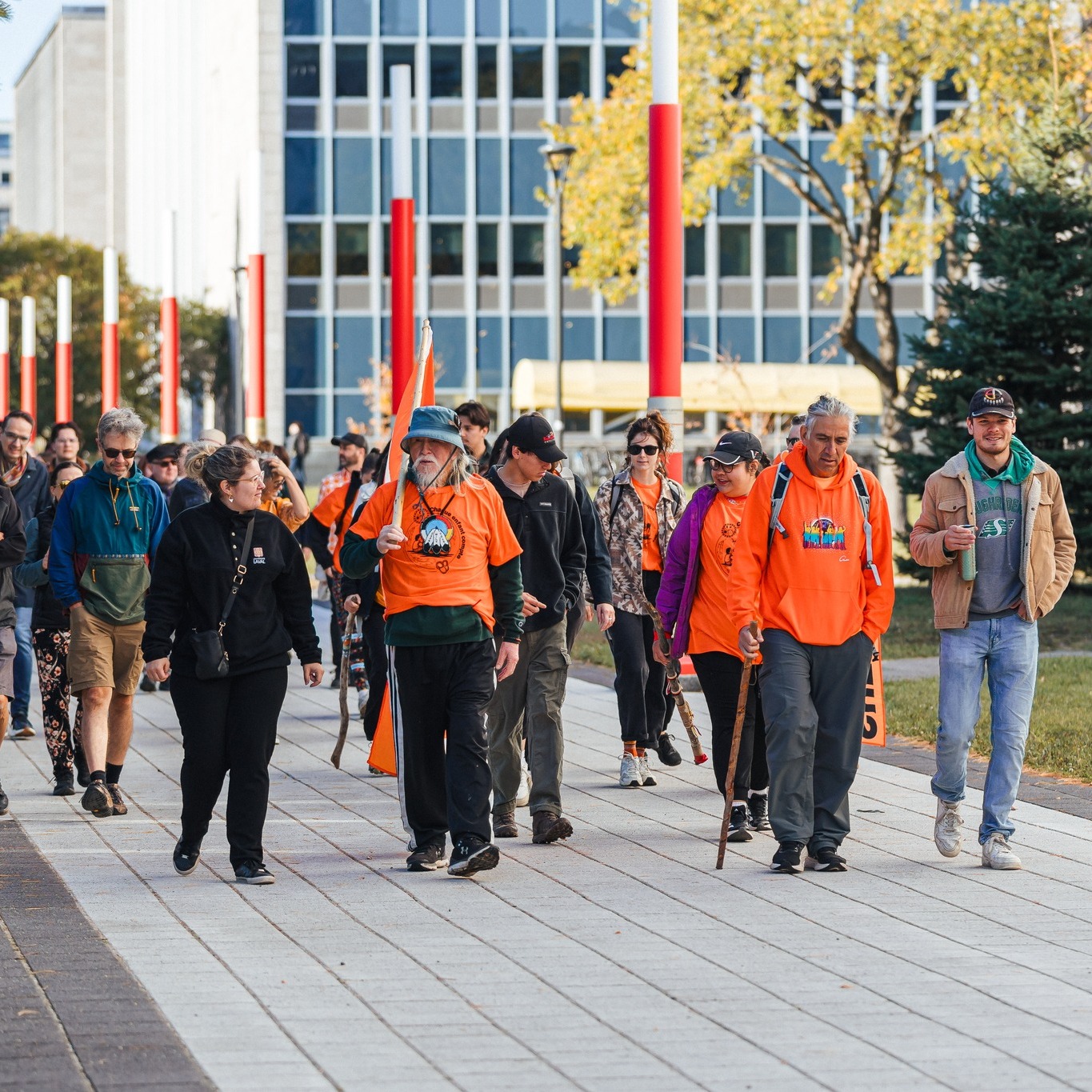
Ryan Carignan, who is Nehiyaw from Pasqua First Nation on Treaty 4 territory outside of Regina, Sask., acted as master of ceremonies for the opening event. He said the morning began with the arrival of walkers from Puamun Meshkenu (“The Path of a Thousand Dreams”), an initiative founded by Dr. Stanley Vollant, an Innu from Pessamit and the first Indigenous person to become a surgeon in Quebec, who is also a prominent advocate for the benefits of physical activity. The six-day walk and paddle, which began in Odanak, near Trois-Rivières and ended in Wendake, stopped at Université Laval, where participants received a powerful welcome from the Indigenous drum group Boyzak.
Carignan emphasized that the day represented communication, partnership, and student support. “The university is pro-reconciliation, and partnerships with Indigenous organizations and businesses are key to reconciliation. We invited the Sagamité food truck [from the Indigenous restaurant of the same name in Wendake] and Boyzak with a desire to celebrate culture in ways that are living, practical, and reciprocal,” said Carignan, who works at Laval’s Centre des Premiers Peuples.
Carignan told the QCT that the morning ceremony featured remarks from Senator Michèle Audette; Dr. Stanley Vollant; Édouard Kistabish, former chief of the Anicinape community of Pikogan; and Caroline Sénécal, deputy vice-rector of academic and student affairs at Université Laval.
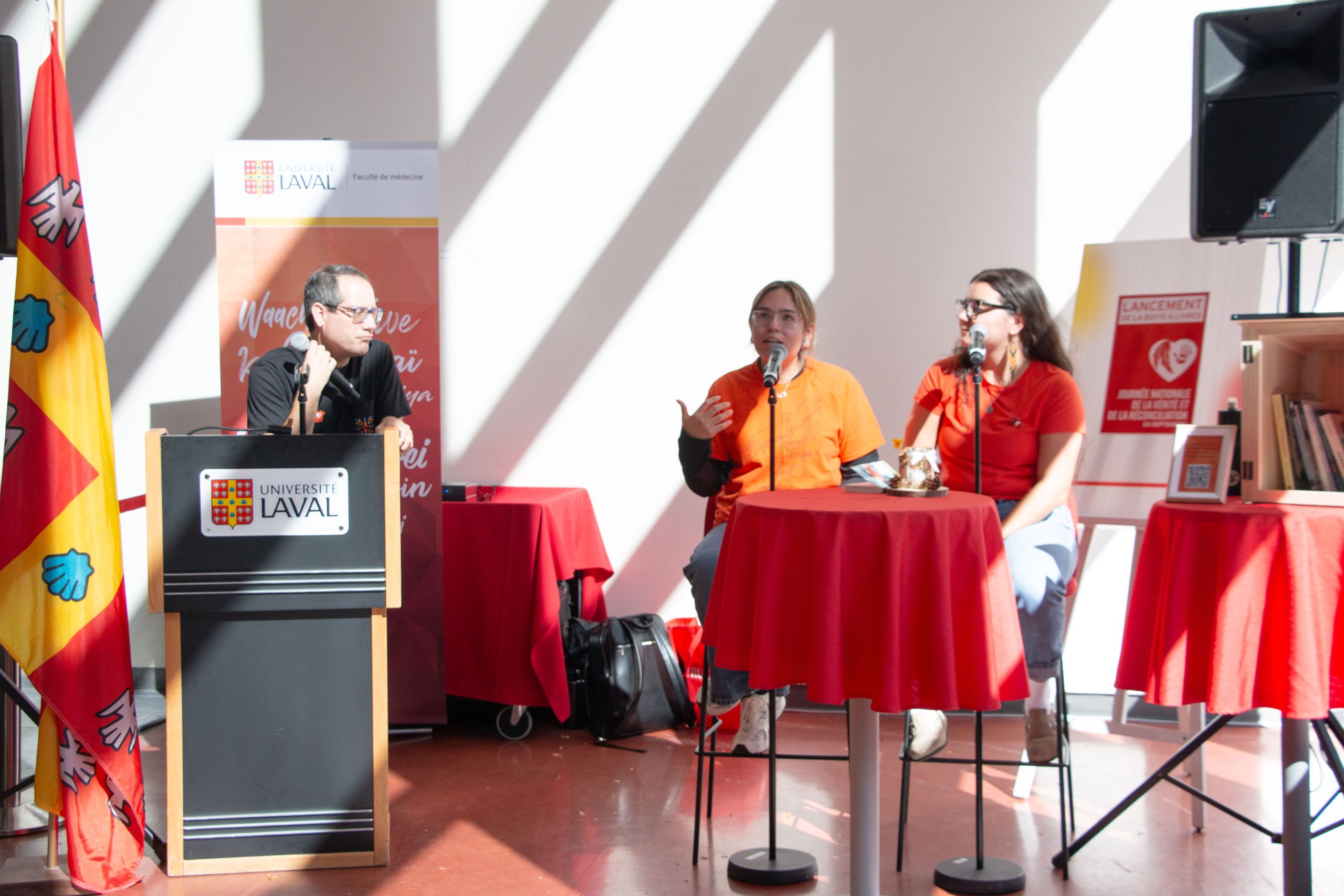
Later in the day, the faculties of medicine, pharmacy and nursing inaugurated the Boîte à livres Premières Nations et Inuit, (First Nations and Inuit book box) a book-sharing box featuring works by Indigenous authors from Quebec. Installed in the Ferdinand- Vandry Pavilion, it invites readers to explore perspectives beyond academia. “It’s a call to let knowledge meet,” said Olivier Barbier, vice-dean of research and graduate studies in the faculty of pharmacy.
For Fabienne Gilbert, who lives in Boischatel and works with the New Pathways Foundation, the day was about creating space for lasting connection. She told the QCT, “It’s important to reflect on the past to better guide our actions in the future, but also to create spaces where conversations between Indigenous and non-Indigenous people can take place.”
Melanie Nogues, a member of the Mi’gmaq community of Gespeg, said reconciliation must go beyond symbolic gestures. “There’s a false pretence sometimes – a sense of bridging the gap just to tick boxes,” Nogues exclaimed. “True reconciliation has to be practised year-round. Communication is key. We’re neighbours, we can learn from each other, and have a lot to offer each other in many ways.” Amélie Flamand, from the Atikamekw community of Wemotaci near La Tuque, said econciliation begins with education. “We are strong, intelligent and self-reliant. What’s missing is an understanding of our culture, languages, and history.” Flamand believes that “Indigenous perspectives need to be part of the provincial curriculum from the start.”
From the walkers’ steady footsteps to the simple act of sharing a book, the event reflected both progress and development – a reminder that reconciliation must be lived daily, through listening, learning, and walking the path together.